01
Trustworthy & adaptive AI
Generalization, uncertainty, and decision-making when an agent encounters conditions outside its training experience.
Explore the projectResearch with human purpose
We study how intelligent systems learn, adapt, and work with people. Faculty and students turn research questions into working prototypes and evidence that can be examined.
About the lab
Based at SUNY Canton and directed by Dr. Mehdi Ghayoumi, DSIL brings together faculty, advisors, and students from across computing, engineering, and applied research.
Develop intelligent systems that people can understand, trust, and use. We connect scientific rigor with human needs, while creating opportunities for students to grow as researchers.
01 / Research directions
Our work connects machine learning and systems engineering with the settings, constraints, and people that give a research problem meaning.
Generalization, uncertainty, and decision-making when an agent encounters conditions outside its training experience.
Explore the projectSelective assistance that supports group learning while keeping instructors in control of when and how AI intervenes.
Explore the projectSocial interaction, expressive behavior, and the relationship between simulated decisions and physical robot actions.
Explore the projectMethods that combine speech, text, visual, and behavioral signals with careful attention to privacy and evaluation.
Explore the projectRobust detection, explainable decisions, and responsible data practices for cyber defense and context-aware monitoring.
Explore the projectVoice interfaces and digital assistants that account for different abilities, communication needs, and user preferences.
Explore the project02 / Research in development
Projects across AI-assisted learning, adaptive agents, robotics, health, security, and accessibility.
Collaborative learning
Human-centered AI facilitation for small-group learning, with an emphasis on purposeful assistance and instructor oversight.
Simulation & data
A simulation and data-generation environment for studying AI facilitation and supporting the development of LearnSync.
Meeting assistance
An experimental connector exploring how an AI assistant can participate visibly in Microsoft Teams meetings.
Adaptive agents
Research on how intelligent agents and robots respond to unfamiliar environments, situations, and action outcomes.
Human–robot interaction
Exploring social interaction, expressive behavior, and assistive roles for small robots in learning and collaborative settings.
Health analytics
The Autonomous Mental Health Assessment Tool investigates privacy-conscious, multimodal approaches to stress screening.
Secure systems
Research into context-aware incident detection, with attention to privacy, explainability, and human oversight.
Inclusive interfaces
Intelligent avatars and voice-based interfaces that support diverse communication needs, adaptable assistance, and user agency.
03 / Publications
Selected work across collaborative learning, cybersecurity, privacy, and health analytics. Search by title or author, or narrow the collection by year and area.
12 papers
LLM
LLM
Electronics, 15(11), 2421
AIR-RES/CAC
CSCE
IEEE UEMCON
CSCI
Machine Learning and Applications: An International Journal
ACM Transactions on Applied Perception
IJIT
CSCE
APCS
No papers match this search. Try another keyword or clear the filters.
04 / Our people
Students work alongside faculty and advisors to frame questions, build systems, evaluate evidence, and communicate what they learn.
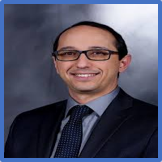
Lab Director
Entrepreneurship Advisor
Scientific Advisor
Scientific Advisor
Scientific Advisor
Data Science Researcher
Data Collection Assistant
Data Science Researcher
Data Science Researcher
Data Science Researcher
05 / Funding & support
Research awards and infrastructure support provide equipment, computing resources, and opportunities to develop ideas beyond the lab.
Equipment support for two Reachy Mini robots within the embodied LearnSync research program.
11 September 2026 · Canino School of Engineering Technology
Entrepreneurial discovery and customer research to examine pathways from lab prototypes to sustainable products and services.
Cloud credits and technical support for data-intensive experimentation, model development, and secure infrastructure.
Support for the Autonomous Mental Health Assessment Tool and its multimodal, privacy-focused research.
Our network
Relationships across research, healthcare, technology, and the community support the lab and its students.








06 / Join the conversation
We welcome students, research collaborators, community organizations, and industry partners. Tell us what you would like to investigate and how you hope to contribute.
ghayoumi@canton.eduShare your interests, relevant coursework or experience, and the time you can commit. Curiosity and a willingness to learn are a good place to start.