About the Lab
DSIL is where ambitious ideas become deployable systems. We combine research rigor with real engineering, and we build work that can be tested in the world.
Welcome to the Data Science Innovations Lab (DSIL) at State University of New York, Canton, directed by Dr. Mehdi Ghayoumi, Assistant Professor of Cybersecurity and Director of the Data Science Minor Program. The lab advances research in Artificial Intelligence, Machine Learning, and Cybersecurity to create deployable, real-world solutions.
DSIL serves as a hub for innovation, connecting academia and industry across healthcare, robotics, digital media, and mental health technology. With modern computing resources and multidisciplinary collaboration, the lab is positioned to address complex data-driven challenges.
Through a collaborative environment and hands-on projects, students and researchers at DSIL work to advance both theoretical foundations and applied systems that can positively impact communities locally and globally.
How DSIL Works
We follow a clear research-to-deployment workflow to keep projects measurable and deliverable.
End-to-End Systems
From data collection and modeling to evaluation, deployment, and monitoring.
Reproducible Research
Strong emphasis on experimental rigor, documentation, and repeatable workflows.
Security by Design
Threat-aware engineering, privacy controls, and resilient architectures.
Human-Centered AI
Interfaces and agents designed for accessibility, interpretability, and trust.
Our Mission
Build trustworthy AI and security systems that can be validated, deployed, and used with confidence.
The mission of the Data Science Innovations Lab is to harness big data and advanced analytics to address high-impact, real-world problems. We design and evaluate solutions that advance both scientific knowledge and practical deployment.
Our teams bring together students and researchers from diverse disciplines to develop robust systems in cybersecurity, healthcare analytics, robotics, privacy, and human-centered AI. The lab emphasizes reproducible research, responsible design, and translational impact.
By mentoring students on funded projects and industry collaborations, DSIL prepares the next generation of data scientists and engineers for meaningful careers in academia, startups, and established organizations.
Research Focus
DSIL focuses on methods and systems that are robust, privacy-aware, and ready for real environments.
- Advanced Machine Learning and Deep Learning: Algorithms for complex pattern recognition, predictive modeling, multimodal fusion, and adaptive decision support.
- Cybersecurity and Privacy: Security frameworks that protect digital assets, model user behavior, and mitigate evolving cyber threats while respecting privacy and regulatory constraints.
- Robust Data and Signal Processing: Methods for processing speech, vision, physiological, and behavioral signals to enable healthcare analytics, intelligent media systems, and human-computer interaction.
- Intelligent and Human-Centered Systems: Interfaces and agents that support users through natural interaction, explainability, and accessibility across domains such as mental health, education, and assistive technologies.
Current Projects
Projects at DSIL are designed to produce working prototypes, reproducible results, and clear outcomes.
AMHAT: Autonomous Mental Health Assessment Tool
AMHAT is a multimodal, privacy-preserving pipeline that analyzes speech, text, and interaction patterns to support early screening of stress, anxiety, and depression in controlled and real-world settings.
The project emphasizes offline processing, minimal data retention, and accessible interfaces to reduce stigma and expand reach for underserved communities.
Explore AMHAT
Learn about the pipeline, validation strategy, and deployment-focused design decisions.
Explore the AMHAT ProjectSmart Surveillance Systems
Facial and speech analysis to support context-aware monitoring, privacy-preserving incident detection, and decision support for safety-critical environments.
Digital Assistants and Accessibility
Intelligent avatars and voice-based interfaces designed to support diverse users, including individuals with disabilities and neurodivergent populations.
Advanced Research Initiatives
Cutting-Edge Projects Shaping the Future
1. Multimodal Biometric Fusion for Security and Privacy
Description: This initiative explores biometric systems that integrate facial recognition, voice authentication, and eye tracking to strengthen security and privacy in digital platforms. Building on work in multimodal biometric fusion, the lab evaluates deep learning based and fuzzy logic based fusion strategies that enhance robustness against spoofing.
Students gain experience with signal processing, feature engineering, fusion architectures, and performance evaluation, with applications spanning banking, telehealth, and secure access control.
2. Deep Learning for Emotion Recognition and Human-Robot Interaction
Description: Extending prior work in facial expression analysis and multimodal emotion modeling, this project investigates how social robots can interpret and respond to human emotions in real time. Convolutional networks and sequence models are used to integrate facial expressions, speech prosody, and gestures.
The goal is to design socially aware agents that improve engagement and adherence in healthcare assistance, customer support, and educational settings.
3. Generative Models for Synthetic Data and Anonymization
Description: This project studies generative adversarial networks and related models that can synthesize realistic, privacy-preserving datasets for healthcare and cybersecurity applications.
The work balances data utility and disclosure risk, providing methodologies for partners who require large-scale datasets while adhering to regulatory and responsible design requirements.
4. Behavior-Driven Cybersecurity Enforcement
Description: Building on research in policy-based access control, this project examines how behavior-aware models can continuously adapt security rules based on user actions.
Students analyze login patterns, network activity, and file access logs to detect anomalies and inform automated controls suitable for enterprise environments.
5. Explainable AI for Trustworthy Decision Support
Description: As AI models influence high-stakes decisions, this project focuses on frameworks that make deep learning models more interpretable and auditable.
Techniques such as saliency mapping, attention analysis, and post hoc explanation are applied to applications in emotion recognition, health analytics, and cyber risk assessment to improve user trust and support compliance.
Our Team
DSIL is a collaborative team of faculty, advisors, and student researchers working across AI, security, robotics, and human-centered systems.

Dr. Mehdi Ghayoumi
Lab Director
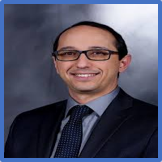
Dr. Kambiz Ghazinour
Entrepreneurship Advisor

Prof. Minhua Wang
Scientific Advisor

Dr. Julius Gene Latorre
Scientific Advisor
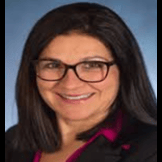
Dr. Marela Fiacco
Scientific Advisor

Dr. Samantha McCarthy
Scientific Advisor

Prof. Tiffany Forsythe
Scientific Advisor

Eliza Ochoa
Data Collection Assistant

Dena Barmas
Data Science Researcher

Gustavo Bermudez
Data Science Researcher

Ryan Simcic
Data Science Researcher

Syed Hussain
Data Science Researcher

Cory Liu
Data Science Researcher

Elena Nye
Data Science Researcher

Ryan Sessman
Data Science Researcher

Cameron Cook
Data Science Researcher

Behnaz Johnson
Data Science Researcher

Anthony Marrero
Data Science Researcher
Our Parent Institution
DSIL is part of the State University of New York (SUNY) system, recognized for its commitment to high-quality education, applied research, and community engagement. As a lab hosted at SUNY Canton, we benefit from interdisciplinary collaborations across engineering, health, and computing.
SUNY support enables DSIL to pursue ambitious projects, engage students in funded research, and maintain strong partnerships with industry and community organizations.
Grants
DSIL is supported by competitive grants that strengthen both foundational research and translational innovation:

Supports entrepreneurial discovery, customer interviews, and market exploration around DSIL technologies, guiding pathways from research prototypes to sustainable products and services.

Provides cloud credits and technical support to build scalable, secure infrastructure for data-intensive applications, enabling rapid experimentation and deployment on AWS.

Funds the Autonomous Mental Health Assessment Tool (AMHAT), a multimodal pipeline that analyzes video, speech, and text for early indicators of depression or anxiety. The project emphasizes privacy, accessibility, and stigma reduction, especially for underserved and remote communities.
Our Partners
We appreciate the collaboration and support of the following institutions and organizations:




Publications
DSIL members publish in peer-reviewed conferences and journals. Selected recent works include:
- 1) E. Nye, K. Ghazinour, M. Ghayoumi. “Rethinking Privacy Laws for Subscriptions: A Consumer Harm Perspective.” CSCE, 2025.
- 2) M. Ghayoumi, K. Ghazinour. “Human Rights in the Shadow of AI: Confronting Bias and Accountability.” IEEE UEMCON, 2025.
- 3) M. Ghayoumi, E. M. Nye, C. Liu. “AMHAT: Multimodal Pipeline for Privacy-Preserving Stress Screening.” CSI, 2025.
- 4) M. Ghayoumi, K. Ghazinour. “Detection of Alzheimer’s Disease Using Bidirectional LSTM and Attention Mechanisms.” Machine Learning and Applications: An International Journal, 2025.
- 5) M. Ghayoumi, K. Ghazinour. “Extending the Frontiers of Eye Tracking: Early Detection of Alzheimer’s Disease Using Bidirectional LSTM and Attention Mechanisms.” ACM Transactions on Applied Perception, 2024.
- 6) I. Babaev, T. Packer, M. Ghayoumi, K. Ghazinour. “MAISON: A Model for Effective Hybrid Management of Cybersecurity and Cyber-Trust.” IJIT, 2024.
- 7) M. Ghayoumi, K. Ghazinour. “Early Alzheimer’s Detection: Bidirectional LSTM and Attention Mechanisms in Eye Tracking.” CSCE, 2024.
- 8) M. Ghayoumi, K. Ghazinour. “Advancing MAISON: Integrating Deep Learning and Social Dynamics in Cyberbullying Detection and Prevention.” APCS, 2024.
Join Our Team
DSIL welcomes motivated undergraduate and graduate students, visiting scholars, and collaborators from industry. Opportunities include research assistantships, capstone projects, and co-authored publications.
Prospective team members should have a strong interest in data science, programming, and responsible application of AI in areas such as cybersecurity, healthcare, or human-computer interaction.
Professional Interest Form
Interested in partnering with DSIL, co-developing proposals, or hosting student projects? Please complete the form below and we will follow up.